)
)
Microelectronics UK 2026 Startup Spotlight: Silicon Microgravity
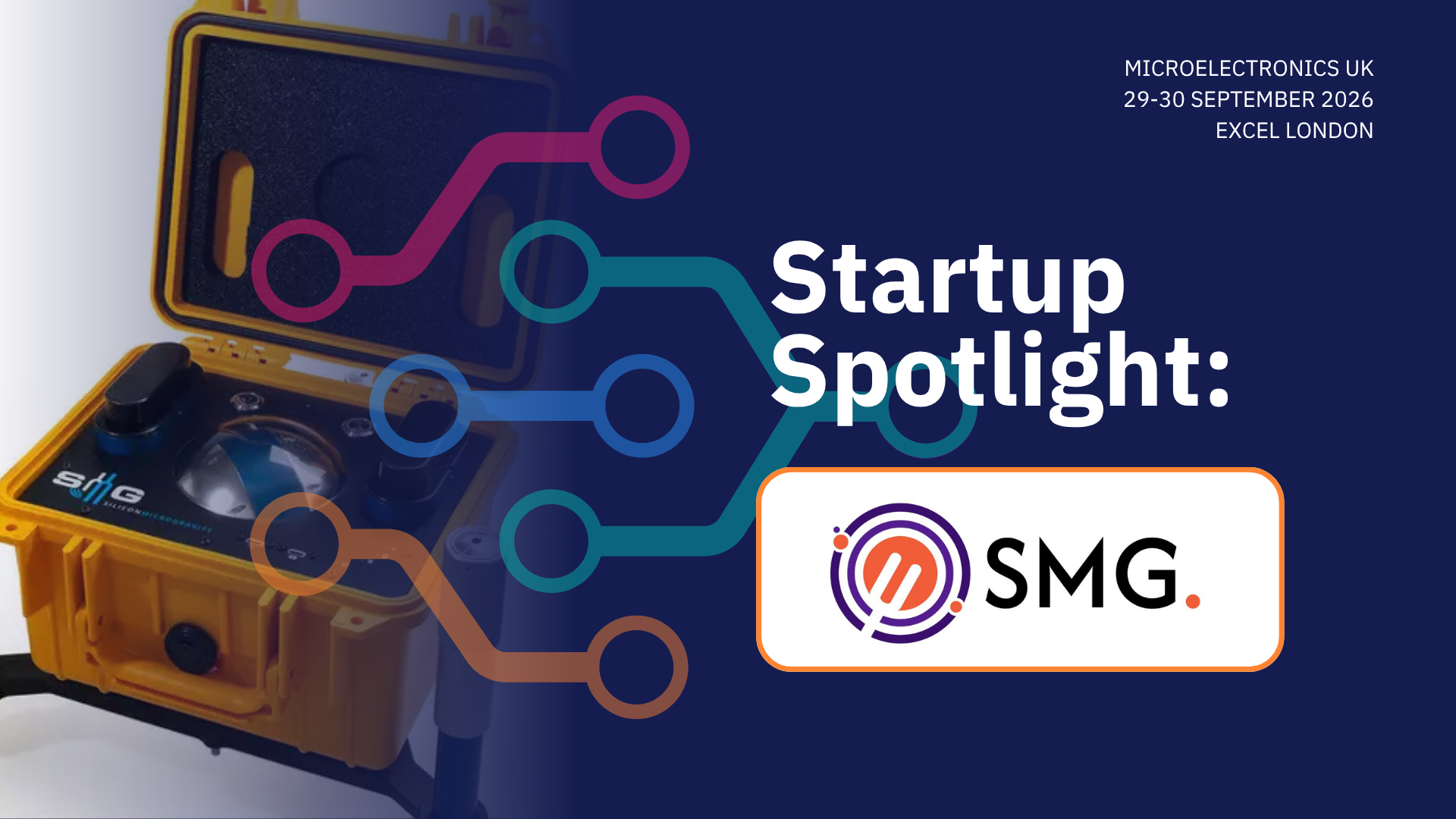
In the latest in a series inviting innovative startups to tell their stories, Microelectronics UK features Silicon Microgravity (SMG), a provider of future-ready MEMS (micro-electromechanical system) inertial and gravity sensors. The Cambridge University spinout was recognised by the UK government earlier this year for semiconductor innovation in inertial navigation and 'pioneering' contributions to silicon MEMS technology. The leadership team comprises CEO Francis Neill, CTO Colin Baker, CFO Steve McGillivray, GM Motion David Blumstein, and GM Gravity Jez Wingate.
You can find out more about SMG here. Many thanks to Colin Baker for providing these answers.
---
In one sentence, what does your company do?
Silicon Microgravity is a Cambridge-based company that develops MEMS (micro-electromechanical systems) sensors for inertial navigation and gravity surveys.
What industry problem are you solving?
Our technology, built on low-cost, high-performance sensors, addresses two critical challenges: navigating accurately when GPS/GNSS signals are unavailable, and detecting what lies beneath the ground.
Why is this problem becoming more important right now?
GPS/GNSS-denied navigation is becoming urgent as jamming and spoofing is now widespread in conflict zones, which threatens both military and civilian systems. Meanwhile, the rapid growth of autonomous drones and vehicles means more systems depend on continuous positioning, often in environments where GPS does not work (indoors, underwater, underground and built-up cities).
Knowing what's underground is equally pressing: ageing infrastructure needs mapping without costly excavation, the energy transition is driving demand for faster mineral exploration, and urban development requires non-invasive subsurface surveys.
Traditional solutions of high-end inertial systems and gravimeters have been too large, expensive, and power-hungry for widespread use. Low-cost, high-performance miniaturised MEMS sensors make it possible to deploy this capability at scale, across mass-market platforms.
What makes your approach different from existing solutions?
Most existing inertial sensors force a trade-off: high performance at high cost and size, or low cost at the expense of accuracy and drift. Our MEMS based approach breaks that trade off, delivering navigation grade performance, in a small, low power, low cost package that can be manufactured at scale.
For gravity sensing, traditional gravimeters are bulky, expensive, fragile, and difficult to use. Our MEMS resonator-based approach enables compact, robust, easy to use, and scalable gravity sensors opening markets that simply weren't practical before, such as mobile gravity surveys.
Rather than choosing between "good" and "affordable," our sensors deliver high precision navigation and subsurface sensing across far more platforms and price points, without compromising real world performance.
What has been the biggest challenge in scaling the business so far?
Deep tech is inherently hard to scale: developing novel MEMS sensors requires long R&D cycles, significant capital for specialist fabrication and engineering talent, and solving interconnected problems across materials, packaging, electronics, and software before reaching a manufacturable product.
This combination of long timelines, high costs, and complexity makes it difficult to show traction on timescales investors often expect. Balancing rigorous engineering with building credibility and securing funding has been the central challenge in scaling the business.
What has been your biggest milestone to date?
Our biggest milestone has been releasing two flagship products in early 2025: the Gaia field portable MEMS gravimeter and our navigation grade MEMS accelerometer. Together, these releases prove out our core technology across both gravity sensing and inertial navigation, marking our transition from R&D to deployable products.
What excites you most about the future of the microelectronics industry?
What excites us most about the future of the microelectronics industry is how high-performance MEMS, unlike traditional MEMS, can now match the precision of much larger, costlier systems while remaining small, low power, and cheap to produce. Combined with advances in quantum technologies, this could unlock intelligent, distributed sensing at massive scale, a genuinely transformative shift for the industry.
What’s next for the business over the next 12 months?
Over the next 12 months we plan to scale the production capabilities at SMG to meet market demand and release new products on both sides the business. We have an exciting ASIC development program that will allow us to reduce the size, weight and cost of our navigational grade accelerometer product, and will release gravity products relating to mobile and borehole gravimetry.