)
)
Microelectronics UK 2026: Meet the Sponsor: Force Technologies

Some say life begins at 40 - and for Force Technologies, that may well be true. Founded in 1986, Force Technologies has a long heritage as a solution house for hard to find, end of life and obsolete semiconductors focusing on defence, aerospace, and industrial/medical sectors among others, but with the recent launch of its Sovereign Test Lab, the company is not standing still.
Microelectronics UK caught up with CEO Karen Salmon to discuss the market opportunity, the wider landscape, and the continued risks around the grey market.
Many thanks to Karen for providing these answers, as well as Jasmin George for liaising.
---
Tell us about your role and what Force Technologies does - what problems are you solving, and for whom?
I am Karen Salmon, CEO of Force Technologies, and my main role is setting the direction of the business and making sure our capabilities are aligned with what customers need. In practice, that means I support all functions of the company, which gives me perspective across the business, and helps me spot areas where we could do something better or differently for our customers.
My team sometimes look at me with some trepidation when I announce that I have a new idea, but generally, (after a collective deep breath!), it becomes something that genuinely helps the business or our customers.
Force Technologies provides continuity solutions for obsolete semiconductors for long-lifecycle platforms in aerospace, defence, rail, and other industrial sectors. Solving obsolescence problems takes many forms, including engineered form, fit and function or one-to-one replacements, upscreening, anti-counterfeit testing and secure long-term storage of die and packaged components.
What are the defining technical and operational pressures facing your sector right now - and where do you see the industry underestimating the challenge?
As is well known across the industry, the boom in AI applications has led to massive demand for advanced memory chips. Foundries are shifting their production to the higher-demand and higher-value technologies, leading to the consolidation and discontinuation of other product lines.
Semiconductor obsolescence management is a perpetual problem for companies supporting long lifecycle platforms across aerospace, defence, rail, nuclear, industrial and medical industries. And this is where I think the industry is underestimating the challenge.
All too often, component obsolescence isn’t considered until devices start becoming difficult to procure. At this point, continuity options start to narrow, and costly redesigns and lengthy requalification processes threaten. The earlier obsolescence is considered, the more options there are.
Which application areas or end markets present the strongest near-term opportunity for your technology, and what is driving that demand?
Defence and aerospace are markets that are characterised by high value platforms that remain operational for a long time: 20, 30, 40 years, or even longer. By contrast, microelectronics technology moves quickly, with some product lifecycles lasting as little as three to five years.
This creates a significant gap between the requirement for electronic systems to remain operational and supportable over the long term, and the availability of the components needed to maintain them. This challenge is particularly acute in aerospace and defence markets, yet it is a challenge for all long-lifecycle systems, including rail, infrastructure, medical and industrial applications.
The shortening of product lifecycles and the high demand for components creates scarcity that can push buyers towards the less reputable end of the supply chain. This is where the risk of counterfeit or non-confirming components starts to increase, and for high-reliability systems, this can have serious safety, reliability and compliance implications.
That’s one of the reasons Force Technologies recently opened its Sovereign Test Lab (below), a UK-based facility dedicated to anti-counterfeit semiconductor testing. From visual inspection to X-ray through to electrical testing and decapsulation, our lab technicians test parts in line with AS6171 standardised testing practices, giving customers clear evidence and greater confidence in the reliability of components being used in critical systems.
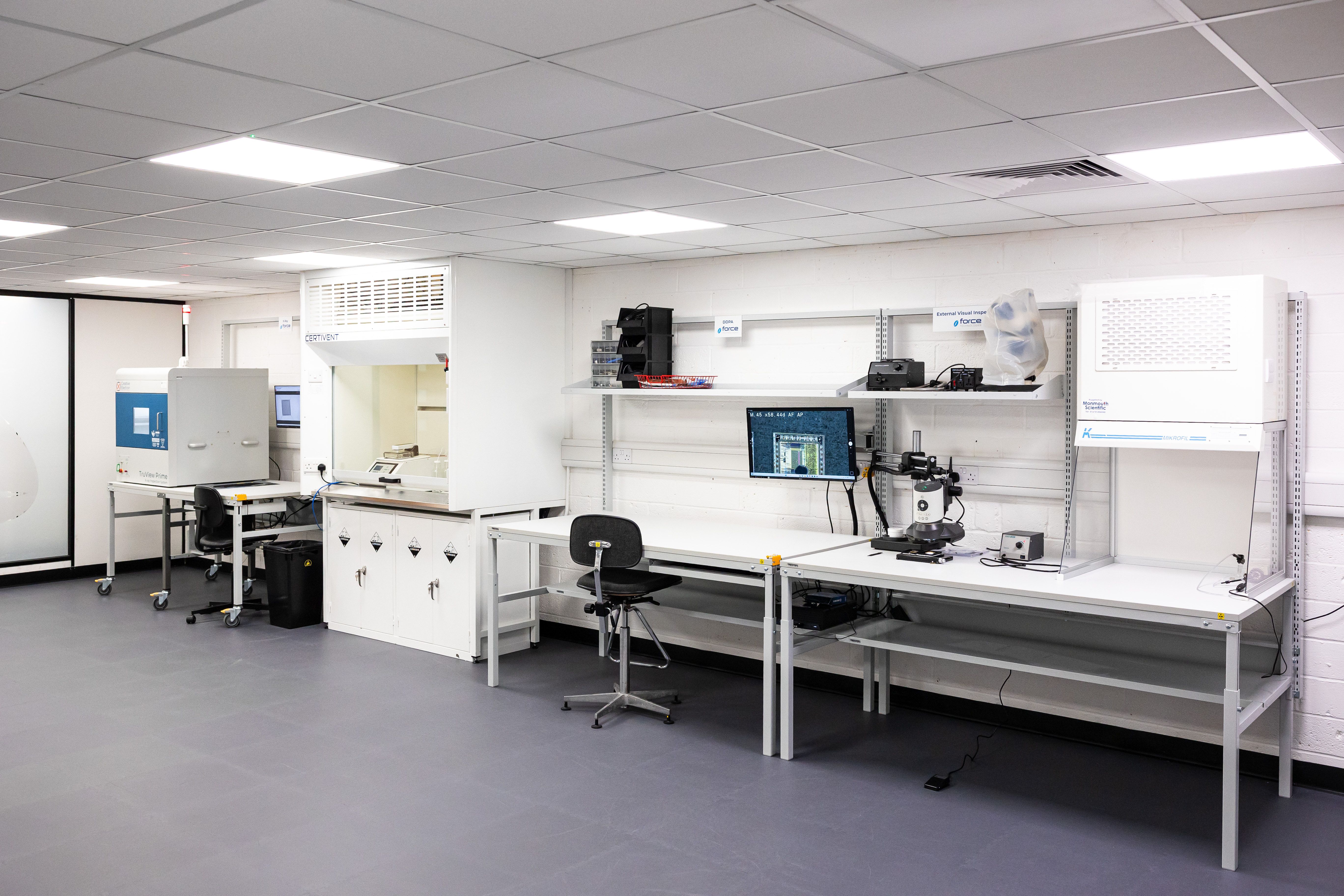
Anti-counterfeit testing equipment in the new Sovereign Test Lab at Force Technologies. Picture credit: Force Technologies
Which emerging technologies or engineering approaches are you backing for the next three to five years - and what would it take for them to cross from promising to mainstream?
Obsolescence management is one of those engineering approaches that doesn’t always fare well in the innovation beauty contest. It is not shiny or fashionable, and by its nature it often deals with older platforms. But those who ignore it, do so at their cost.
The way we address continuity has to be highly innovative, because the challenge is complex and can have huge cost, time and operational implications.
I have coined the idea of “The Continuity Principle”, and I truly believe this will provide great support to critical industries. It is an approach to engineering and procurement that puts long-term availability, design continuity and component assurance at the centre of the conversation much earlier. For organisations that have treated obsolescence as something to deal with later, that can feel like a radical shift.
Events like Microelectronics UK bring together engineers, researchers, and industry decision-makers under one roof. How valuable is that kind of in-person concentration of expertise to you and your team?
Getting together with the microelectronics industry is a very valuable exercise for all. Technologies change and develop fast, and yet obsolescence management is still a hugely neglected area. For example, I believe there is still no obsolescence management degree or higher education qualification in the UK that addresses this wide-ranging issue. An electronics engineer could graduate without ever having considered obsolescence in detail as part of their studies. Raising awareness of this oft-overlooked area is vital if the UK is serious about building resilient, sovereign, sustainable microelectronics capability.
What do you want engineers and technical buyers to come away understanding about Force Technologies after speaking with you at the show - and what conversations are you expecting to have on the floor?
I want engineers and technical buyers to come away understanding that obsolescence is something that they need to think about much earlier in the lifecycle of a system. Too often it is treated as a problem for later.
I also want people to be aware of the risks around counterfeit, grey market, or non-franchised distribution. Component scarcity puts everyone under pressure, and can introduce serious risks if parts are not suitably verified.
And most importantly, I want the industry to know that if they are facing an obsolescence issue or difficulties in procuring original OEM components, there are solutions out there. It’s all about engaging with specialists early enough to understand the options. At Force Technologies, there is usually a way forward before a customer has to resort to expensive and time-consuming board redesign, recertification and requalification.
Is there a leader, engineer, or mentor who has shaped how you approach your work - and what is the most enduring lesson you took from them?
Ian Blackman, Fellow of the International Institute of Obsolescence Management is one of my best friends in the industry. He has now retired, but his work across avionics and defence in procurement, component engineering and obsolescence management has shaped the way obsolescence is considered and handled across these sectors. For me, he inspired me to persevere with problems, to find a solution and not go straight for redesign. He taught me that there is a mountain of information out in the industry, we just have to look in the right places, engage with an open mind, and think outside of the box.
What does the next 12 months look like for Force Technologies - in terms of product direction, capability expansion, or where you are focusing development resource?
In June 2026, Force Technologies celebrated its 40th anniversary, and did so in style with the formal opening of the Sovereign Test Lab. Earlier in the year, we also opened our new Titan Building, for the long-term storage of bare silicon die and packaged components.
Behind these capabilities is of course the processes, training and quality systems to support these. It has been a significant expansion of our capability in two crucial areas that we know are required by our customers and the markets we serve.
Over the next 12 months, our focus is on embedding those capabilities and making sure the offer is clear. The Sovereign Test Lab and Titan Long Term Storage are both UK-based capabilities that address very real problems for those supporting long-lifecycle systems.
We will also continue to talk to customers about how continuity planning can help them be more resilient. Counterfeit risk, allocation, product change and obsolescence are not going away, so our focus is on helping customers plan earlier and preserve options before problems become too big to solve.